**Description**: Describe your changes.

As title.
Added unit test for the case.

**Motivation and Context**
- Why is this change required? What problem does it solve?
- If it fixes an open issue, please link to the issue here.

Fix issue #12979
Since CUDA EP became a shared library, most of internal functions are
not accessible from `onnxruntime_test_all`, we need a new mechanism to
write CUDA EP-specific tests. To this end, this PR introduces a general
infra and an example test for deferred release in CUDA EP. When adding
this test, we also found the current deferred release will cause error
when pinned CPU buffer is not allocated by BFCArena, and this PR also
makes a small fix (see changes in rocm_execution_provider.cc and
cuda_execution_provider.cc).

This PR also fixes a deferred release bug found by new tests.
# Motivation
Currently, ORT minimal builds use kernel def hashes to map from nodes to
kernels to execute when loading the model. As the kernel def hashes must
be known ahead of time, this works for statically registered kernels.
This works well for the CPU EP.
For this approach to work, the kernel def hashes must also be known at
ORT format model conversion time, which means the EP with statically
registered kernels must also be enabled then. This is not an issue for
the always-available CPU EP. However, we do not want to require that any
EP which statically registers kernels is always available too.
Consequently, we explore another approach to match nodes to kernels that
does not rely on kernel def hashes. An added benefit of this is the
possibility of moving away from kernel def hashes completely, which
would eliminate the maintenance burden of keeping the hashes stable.

# Approach
In a full build, ORT uses some information from the ONNX op schema to
match a node to a kernel. We want to avoid including the ONNX op schema
in a minimal build to reduce binary size. Essentially, we take the
necessary information from the ONNX op schema and make it available in a
minimal build.
We decouple the ONNX op schema from the kernel matching logic. The
kernel matching logic instead relies on per-op information which can
either be obtained from the ONNX op schema or another source.
This per-op information must be available in a minimal build when there
are no ONNX op schemas. We put it in the ORT format model.
Existing uses of kernel def hashes to look up kernels are replaced
with the updated kernel matching logic. We no longer store
kernel def hashes in the ORT format model’s session state and runtime
optimization representations. We no longer keep the logic to
generate and ensure stability of kernel def hashes.
This allow us quickly launch a microbench session by, for example:
```bash
python gemm_test.py T N float16 256 256 65536
```
So that we can quickly see which one is the fastest.
**Description**: Describe your changes.
XNNPACK takes pthreadpool as its internal threadpool implemtation, it
couples calculation and parallelization. Thus it's impossible to
leverage ORT's threadpool (EIGEN/OPENMP based). So we enabled
pthreadpool in XNNPACK EP in this PR.
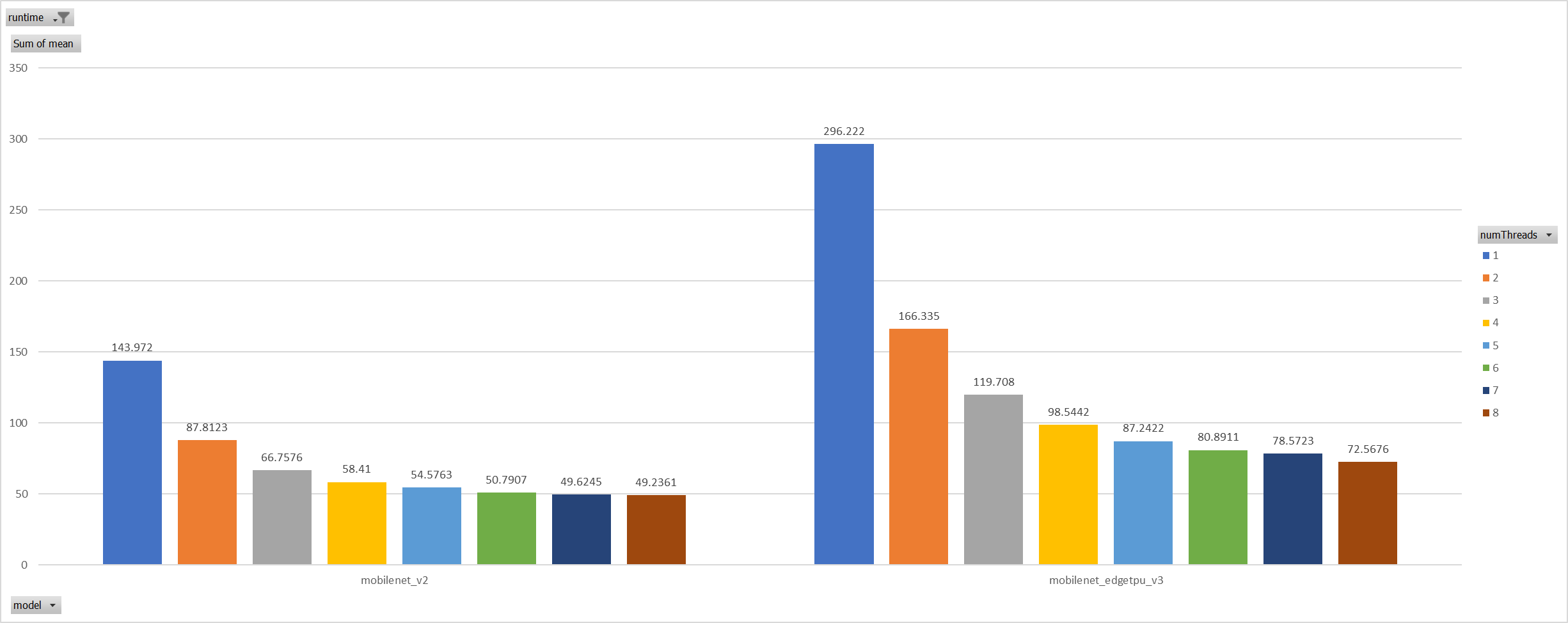
Case 1: Pthreadpool coexist with ORT-threadpool simply
Expriments setup
hardware:RedMi8A with 8 cores, ARMv7
The two threadpool has the same pool size form 1 to 8.
Two models: mobilenet_v2 and mobilenet_egetppu.
we can see the picture below and draw a conclusion, latency are even
higher from 5 threads or more.

Case 2:
For the reason of performance regression with 5 more threads,
ORT-threads are spinning on CPU and diddn't realease it after
computation finished. It's equivalent of creating 5x2 threads for
parallelization while we have only 8 cpu cores.
So I mannuly disabled spinning after ort-threadpool finished and enabled
it when enter ort-threadpool.
The result is quite normal now.
Case 3:
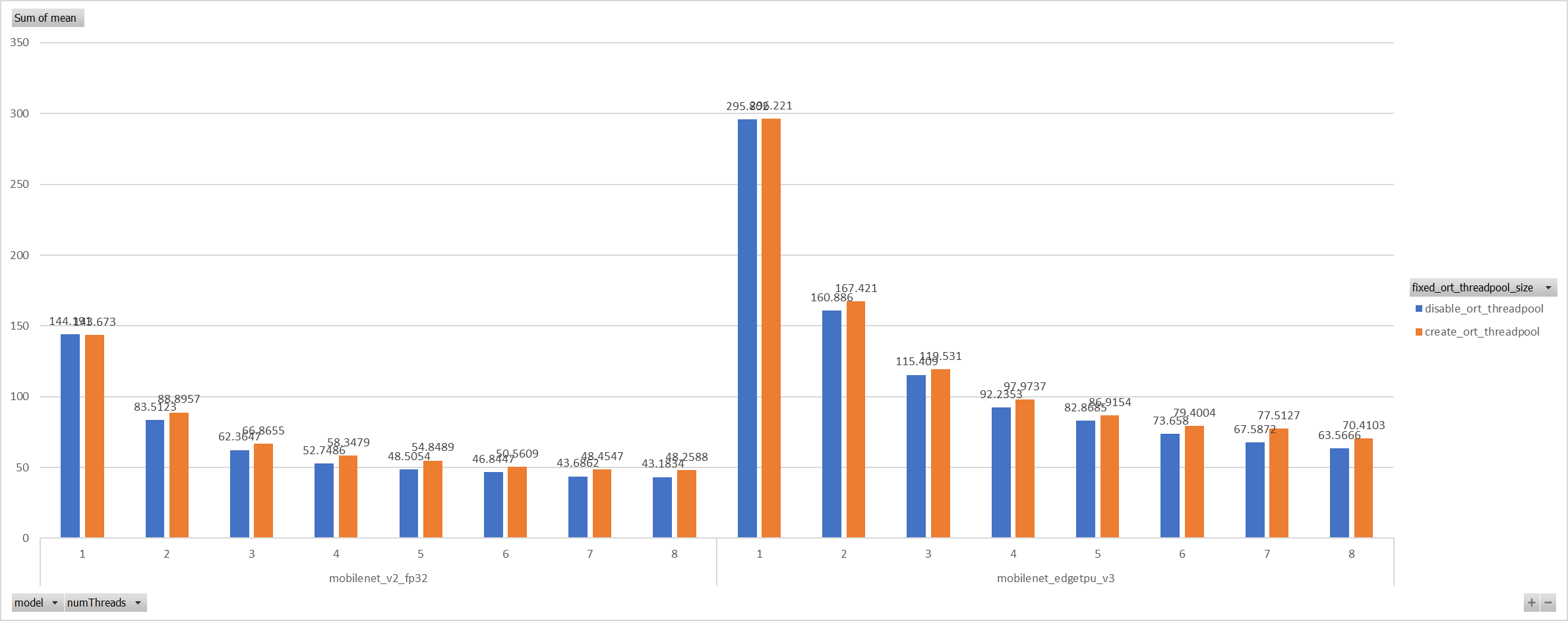
Even we achieved a reasonable results with disabling spinning, Will
ORT-threadpool still impact performance of pthreadpool?
we have expriment setting up as: Setting ORT-threadpool size
(intra_thread_num) as 1, and only pthreadpool created.
Attention that, almost a third of ops are running by CPU EP. we are
surprisingly find that disabling ort-threadpool is even better in
performance than creating two threadpool.
Case 4:
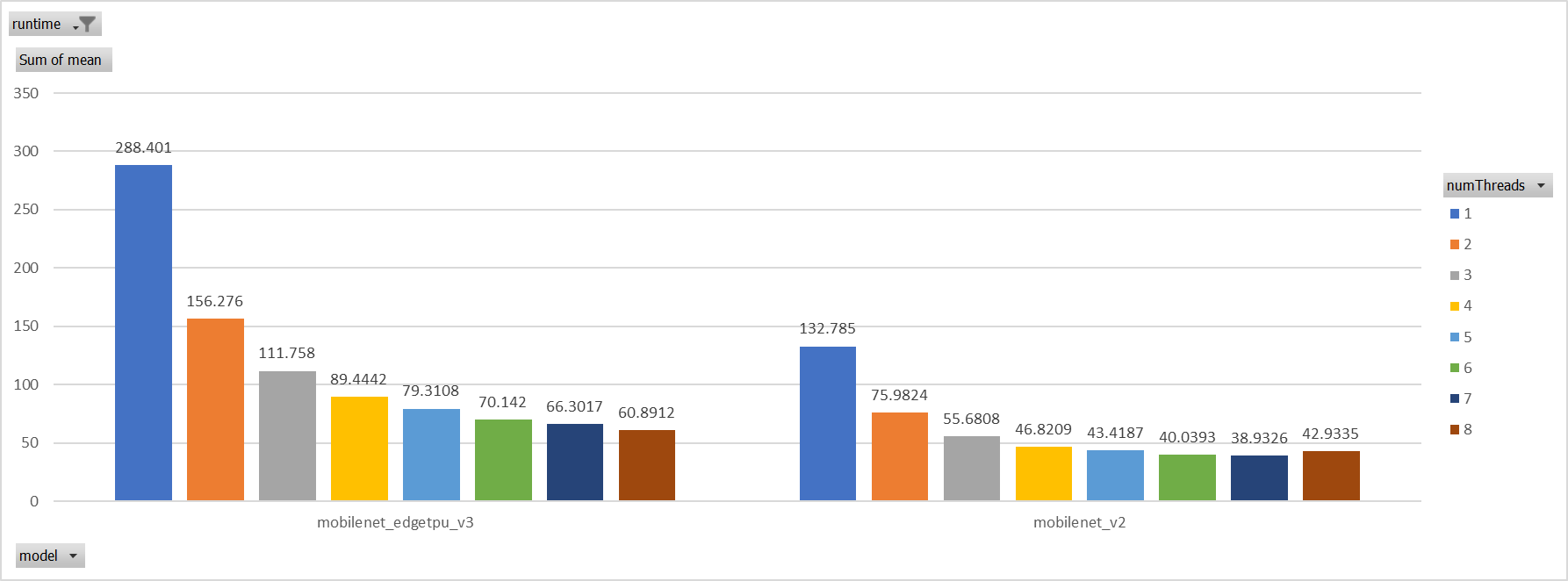
Use a unified threadpool between CPU ep and XNNPACK ep.
It's the fastest among all. But if we take the similar workload
partition strategy as ORT-threadpool, it could be faster.
**Motivation and Context**
- Why is this change required? What problem does it solve?
- If it fixes an open issue, please link to the issue here.
Co-authored-by: Jicheng Wen <jicwen@microsoft.com>
**Description**: Remove the `settings.json` line in gitignore.

**Motivation and Context**

Having `settings.json` tracked in git has created annoying diffs when it
is modified locally. This PR removes the entry in gitignore but
maintains the `settings.json` in the repo so that we have a good
default.
Recent change in CUDA EP #12814 makes hipify extremely slow and breaks the building. This PR fixes it by c

The onnxruntime/contrib_ops/rocm/bert/attention.h is checkout-ed from the version before #12814 and manually hipify-ed.
Slightly extend amd_hipify.py to allow wildcard file match and exclude all `tensorrt_fused_multihead_attention/*` files from hipify
Fix two warnings:
1. Warning: Avoid calling new and delete explicitly, use
std::make_unique<T> instead (r.11).
   Fix: new is replaced by creating unique_ptr and unique_ptr.release
delete is replaced by unique_ptr.reset and unique_ptr's destructor.
2. Warning: Buffer overrun while writing to 'cpu_buffers_info->buffers':
the writable size is 'buffers.public: unsigned __int64 __cdecl
std::vector<void \*,class std::allocator<void\*> >::size(void)const ()
\* 8' bytes, but '16' bytes might be written.
Fix: Replace void* with cudaStream_t and void** with
std::vector<cudaStream_t>.
**Description**: **Python API Bindings for on device training. **
**Motivation and Context**
- This PR contains api bindings so python users can perform a whole
training loop.

Co-authored-by: Adam Louly <adamlouly@microsoft.com@orttrainingdev7.d32nl1ml4oruzj4qz3bqlggovf.px.internal.cloudapp.net>
Co-authored-by: Baiju Meswani <bmeswani@microsoft.com>
QLinearConv does not work with DML EP because this optimizer intended for CPU EP is wrongfully applied to it.

Limit NHWC optimizer to nodes assigned to the CPU EP
* consume ONNX 1.12.1 to prevent vulnerability issue while loading external tensors

* update ONNX 1.12.1

* test updated PR

* use official rel-1.12.1 commit
* Warn on node EP fallback from preferred provider
* Clarify with comment
* Update to ORT's weird coding style for ragged parameter wrap
* Android build error: unused parameter ‘providers’
* Update logic to be more robust
* Updates from Pranav's feedback about messaging to rerun with verbose and respecting explicit vs implicit EP addition. Also merge from main.
* brace style patch up
* Update with feedback from Pranav and Scott McKay
* Restore node_placement_set after realizing it only applies when is_verbose is true
* Fix build warning on Android
* Renamed to node_placement_provider_set per Pranav's suggestion




