### Description
Fix issue in LeakyRelu Opbuilder for HTP backend.
Qnn Prelu(Onnx LeakyRelu) requires alpha data as the 2nd input while
Onnx set it as attribute. HTP backend requires input to be quantized. It
caused Qnn Op validation failed by setting the 2ns input as float32 data
type.
Fix:
Need to set the 2nd input as quantized input for HTP backend. Calculate
the quantization parameter and quantize the alpha data into uint8.

### Motivation and Context
Unblock models with the LeakyRelu execution on QualComm HTP backend.
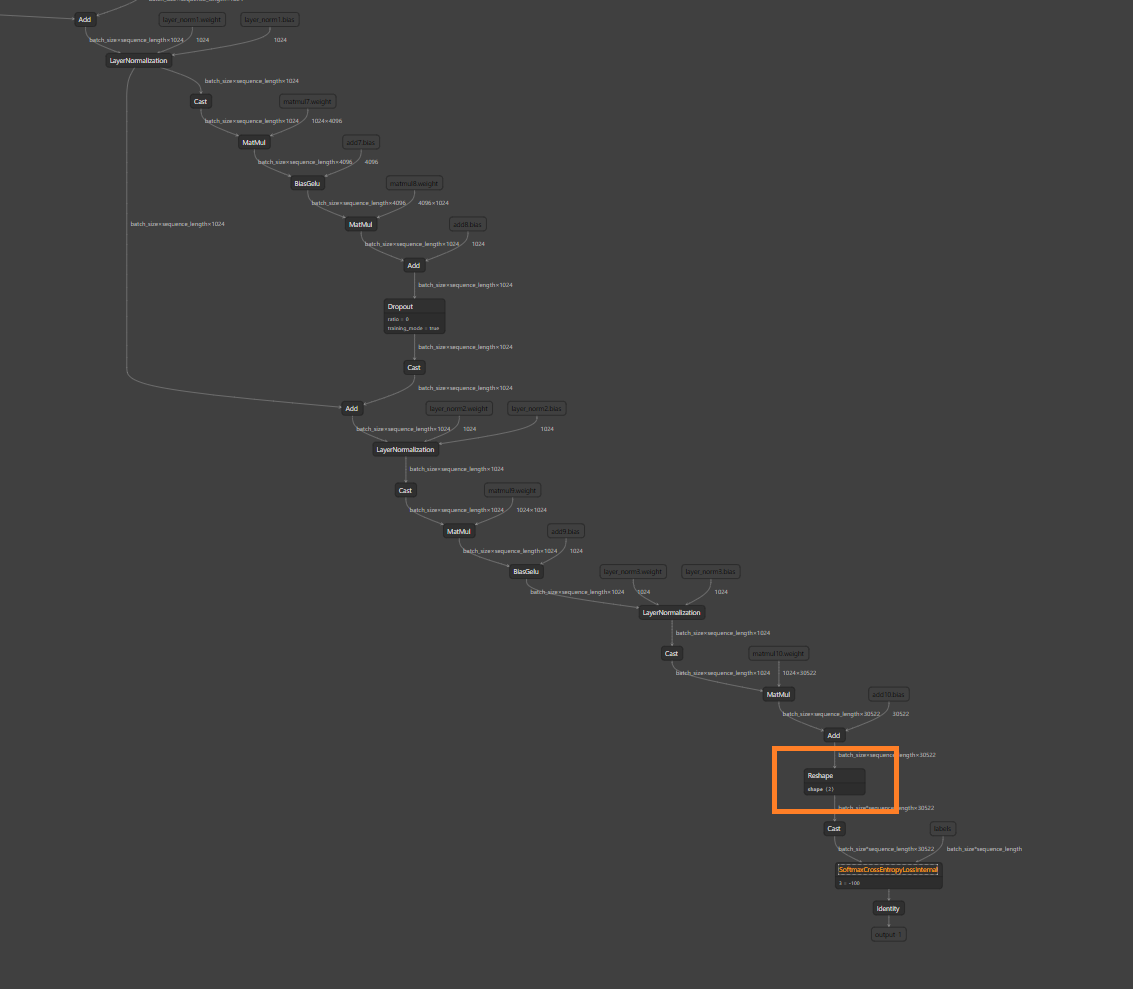
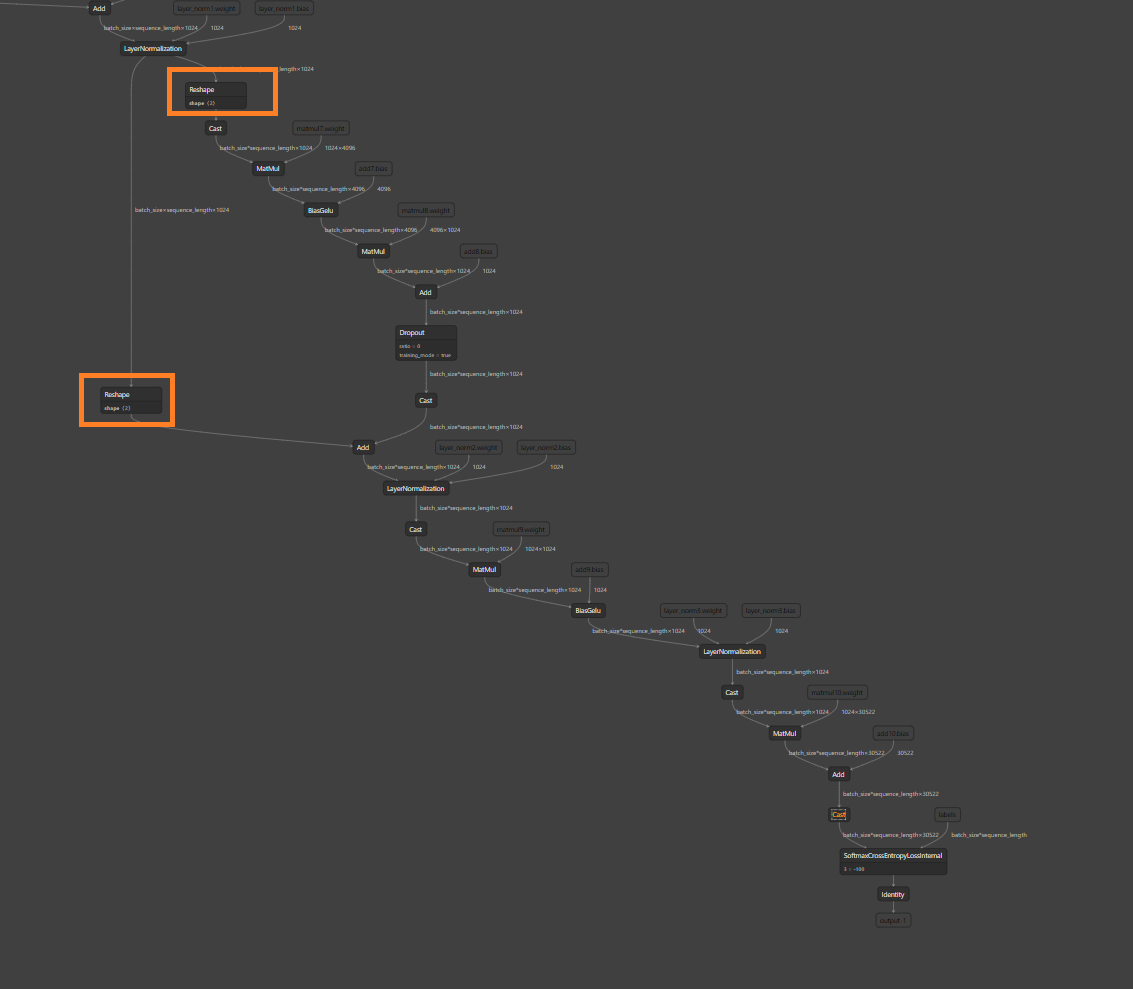
### Introduce shrunken gather operator

Exist Gather operator schema won't guarantee output element count will
be smaller than input element count.
Actually, it is possible output element count >, =, or < input element
count.

For some cases we know for sure output element count MUST be <= input
element count, we will upstream those Gather operators to reduce compute
flops.

So this PR introduces an ShrunkenGather which explicitly guarantee
output count will be smaller than input count. The operator add
additional restriction on inputs, but still re-use existing Gather's
implementations plus input check during runtime.

This is a requirement for subsequent optimization (Draft PR:
https://github.com/microsoft/onnxruntime/pull/15401) we will do for
label sparsity and embedding sparsity.
### Description
- Now uses QNN's Resize operator for quantized models
- Still uses QNN's ResizeBilinear or ResizeNearestNeighbor for
non-quantized models.

### Motivation and Context
This update is necessary to support more models on QNN HTP backend.
Specifically, we need to support Resize's `pytorch_half_pixel`
coordinate transformation mode on HTP.
### Description
1. The protoc package on nuget.org contains binaries for
Windows_x86/Windows_x64/Linux_x86/Linux_x64/MacOS_x64, which can cover
most use cases. Though it doesn't have binaries for AMR64, they are only
needed when we cross-compile for Intel CPUs on ARM CPUs. It is rare.
When you have such a need, you always can build protoc from source by
yourself and pass it to build.py as "--path_to_protoc_exe". Or if you
have security concerns that you don't want to use prebuilt binaries from
outside, you can do the same thing.

2. Remove GoogleTestAdapter related thing. That part of code is out of
maintain.

### Motivation and Context
As a follow-up of PR #15190.
### Description
Apply `get_shared_initializers()` to the encoder and decoder subgraphs
of Whisper before chaining and exporting the full, final model.


### Motivation and Context
The Whisper export process has some overlap between the encoder and
decoder subgraphs due to the format of the BeamSearch contrib op.
Consequently, there is some shared model data that is duplicated in the
final exported product, which can result in a file size increase of
~40%. This PR takes the methods in `convert_generation.py` and applies
them during the whisper export process.

---------

Co-authored-by: Peter McAughan <petermca@microsoft.com>
### Description
Update mimalloc dependency.

### Motivation and Context
The latest release contains important fixes including memory leaks and
used by customers.
### Description
The current ONNX export of Whisper utilizes hard-coded values for
token_ids when configuring the BeamSearch node. This PR removes these
literals and instead takes these values straight from the WhisperConfig.


### Motivation and Context
Hard-coding these values can cause some parity issues when comparing to
default PyTorch behavior - this change to take from WhisperConfig
resolves these.

Co-authored-by: Peter McAughan <petermca@microsoft.com>
WindowsAI build failing due to deprecated .NET5 SDK missing in build
image

.NET5 was deprecated last year, and recently the build machine images
have been updated to not include this SDK.
Unblock failing builds by force insalling .NET5 SDK as part of the build
pipeline.
### Description
XNNPack: allow users to choose whether enable CPU MEM arena or not.
Right now it is hardcoded to true and it is not impacted by the on/off
switch in SessionOption. We should make it work.

### Motivation and Context
As we have such a switch in SessionOption, it should work as expected.
Split `IsTunbaleOpEnable` semantics into **enable tunable op for using**
and **enable tunable op for tuning**.

They remain disabled in general for safety purpose. But
- if session is created with onnx model with tuning results embeded
- the embedded tuning results is set to the EP without error `Status`

then we automatically enable the using, tuning remains disabled.

The planned options will be
- `tunable_op_enable`: The top-level switch of `TunableOp`, indicate if we will run into `TunableOp` related logic. **NOTE:** most of our impls have a bottom impl that is acting as a fallback and is set as the default. In this case, we still call into the `TunableOp`, but no kernel selection, no kernel tuning and caching is involved. This reduced our maintainance burden of a duplicate code path.
- `tunable_op_tuning_enable`: The secondary switch of `TunableOp`, indicate if we will run into the tuning related logic of `TunableOp`

Then for the possible future options:
- `tunable_op_tuning_max_iteration`: blahblah
- `tunable_op_tuning_max_duration_ms`: blahblah
- `tunable_op_flash_attention_enable`: blahblah, for example only, we will not have this.

For developer oriented envvar, it is for developers' convenience to inspect the performance impact of tuning. So there is only `ORT_ROCM_TUNABLE_OP_ENABLE`, `ORT_ROCM_TUNABLE_OP_TUNING_ENABLE` to take the fine-grind control of combinations.
### Description
Upgrade remainding python to 3.11 removing 3.7


### Motivation and Context
<!-- - Why is this change required? What problem does it solve?
- If it fixes an open issue, please link to the issue here. -->
### Description
Allows the creation of zero length tensors via the buffer path (the
array path with zero length arrays still throws as the validation logic
to check it's not ragged would require more intrusive revision), and
allows the `tensor.getValue()` method to return a Java multidimensional
array with a zero dimension. Also added a test for the creation and
extraction behaviour.
### Motivation and Context
The Python interface can return zero length tensors (e.g. if object
detection doesn't find any objects), and before this PR in Java calling
`tensor.getValue()` throws an exception with a confusing error message.
Fixes#7270 & #15107.
### Description
<!-- Describe your changes. -->

Add clog back to onnxruntime_EXTERNAL_LIBRARIES.

### Motivation and Context
<!-- - Why is this change required? What problem does it solve?
- If it fixes an open issue, please link to the issue here. -->

Fix iOS packaging pipeline build failure.
### Description
Register Resize op into nhwc schema for Qnn EP.

### Motivation and Context
Resize op is identified as layout sensitive op for Qnn EP, need to
register it into nhwc schema
Change the default behavior to link against the nvonnxparser library
(onnx-tensorrt parser) that is included with the TensorRT package.
Previously, the default behavior was to build and statically link
against the OSS onnx-tensorrt parser.
Historically, we wanted to incorporate the latest commits/fixes from OSS
parser.
These days the OSS parser is not significantly different from the
included parser library so there is less reason to build against it by
default.
By linking with parser shared library from TensorRT library, the major
benefit is it's much easier to
build/link against a minor version update of TensorRT. And OnnxRuntime
can be updated with a new TensorRT minor version by simply replacing
TensorRT libraries with the newer version. (because the parser is no
longer statically linked into onnxruntime)

Added --use_tensorrt_oss_parser to build.py to support the previous
default behavior. (build + static link OSS parser)
Add support for ViT optimization in optimizer.py
As ViT architecture follows BERT rather closely, we can easily reuse
BERT fusions for ViT. The only difference is that ViT does not have
attention mask, which means there is no Add node in qk paths.
Make the necessary changes in onnx_exporter.py to be able to cover
optimizations with test.
### Description
Update python package pipeline to support 3.11

### Motivation and Context
<!-- - Why is this change required? What problem does it solve?
- If it fixes an open issue, please link to the issue here. -->
### Description
Adjust various code paths to allow Whisper model to function with
BeamSearch op.

Approach: Add a new kModelType enum value in IGenerationParameters as
so:
#### Old: 0 = GPT2, 1 = T5
#### New: 0 = GPT2, 1 = T5, 2 = Whisper

When the user assigns this attribute value to 2, various shape and type
checks are changed to accommodate Whisper inputs.


### Motivation and Context
BeamSearch is currently designed to function with BERT-based models with
inputs as vocab tokens, and needs changes to function with Whisper
inputs (3-D float values processed from audio data).

---------

Co-authored-by: Peter McAughan <petermca@microsoft.com>
### Description
In merge branch,  the run only reads the cache generated in main build.
As a result, each run in merge branch will not upload new cache except
at the first time.

### Motivation and Context
1.Reduce the cache storage.
If there's some big changes, devs should trigger the specific builds
manually in https://dev.azure.com/onnxruntime/onnxruntime/_build. It
still reads own branch cache.
### Description
Add scripts to export Whisper model to ONNX and integrate the ORT
BeamSearch op with the resulting graphs.

Example command to execute this script:

python convert_to_onnx.py -m openai/whisper-large --output whisper -e

---------

Co-authored-by: Peter McAughan <petermca@microsoft.com>
Fix prefast warnings:
(1) Arithmetic overflow: Using operator '*' on a 4 byte value and then
casting the result to a 8 byte value. Cast the value to the wider type
before calling operator '*' to avoid overflow (io.2).
(2) Dereferencing NULL pointer 'key'.
### Description
Rework some external targets to ease building with
`-DFETCHCONTENT_FULLY_DISCONNECTED=ON`
This will allow package managers to more easily provide an onnxruntime
package by reducing the amount of patching needed downstream at each
version.
### Motivation and Context
Availability of onnxruntime in some C++ package managers
https://github.com/microsoft/onnxruntime/issues/7150https://github.com/conan-io/conan-center-index/issues/16699https://github.com/microsoft/vcpkg/issues/20548
My initial intent is to get this in conan but the PR would most likely
be useful (though not tested) to vcpkg as well (and maybe others).
I tried to get only a first batch of not too specific patches (i.e. not
specific to conan).
The first commit reworks `flatbuffers` and just extends what @snnn did
in https://github.com/microsoft/onnxruntime/pull/13991
The second commit reworks `pytorch_cpuinfo`
The third commit reworks `google_nsync`
Temporarily remove Azure build check to unblock PR(s).
We need to investigate the sudden build failure and reenable.

Co-authored-by: Randy Shuai <rashuai@microsoft.com>