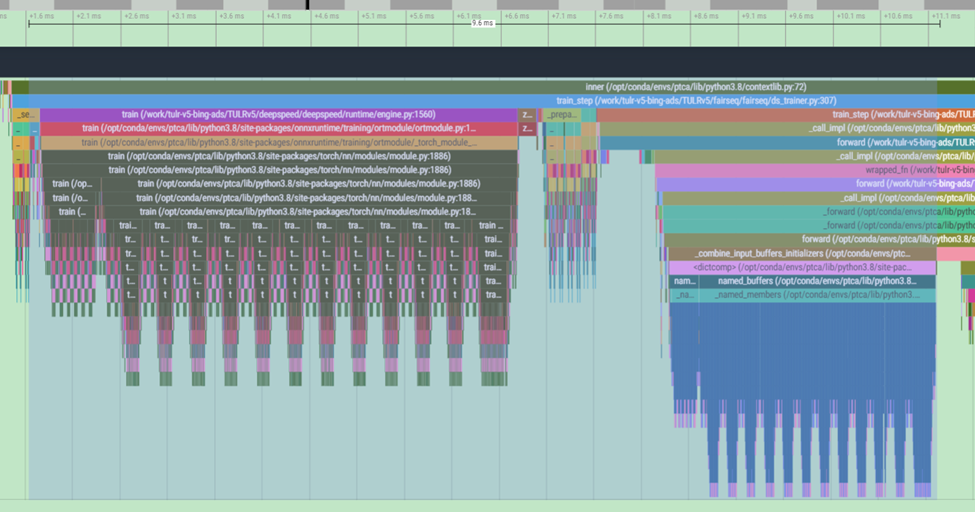
Enable option qnn_context_priority to set QNN context priority, options:
"low", "normal", "normal_high", "high".

### Description
Enable option qnn_context_priority to set QNN context priority, options:
"low", "normal", "normal_high", "high".

This feature guarantees the model inference with higher priority. Tested
with onnxruntime_perf_test tool using same model.
1. Run the model on the NPU with single instance, the latency is 300ms.
2. Run the same model on NPU with 2 instance at same time.
   Case 1:
   both with same priority (high ) -- latency is 600ms
   Case 2:
   1 with low priority -- latency is 30,000ms
   1 with high priority --  latency is 300ms
   Case 3:
   1 with normal priority -- latency is 15,000ms
   1 with high priority --  latency is 300ms
### Description
<!-- Describe your changes. -->

Registers BFloat16 datatype as valid input type for CUDA Neg Kernel.

### Motivation and Context
<!-- - Why is this change required? What problem does it solve?
- If it fixes an open issue, please link to the issue here. -->

Enabling `meta-llama/Llama-2-70b` to be finetuned with ONNX Runtime
training.

---------

Co-authored-by: Prathik Rao <prathikrao@microsoft.com@orttrainingdev8.d32nl1ml4oruzj4qz3bqlggovf.px.internal.cloudapp.net>
### Description
Add an op named `FlattenAndUnpad`.
This op implements functions:
1. Flatten the first two dims of input tensor.
2. Gather valid value from input tensor with index tensor,.


### Motivation and Context
The grad op of `PadAndUnflatten` was `GatherGrad` which is inefficient
in performance.
I implement this `FlattenAndUnpad` just to replace the `GatherGrad` as
grad of `PadAndUnflatten`.
With this op, we also can simplify the "Reshape + ShrunkenGather"
pattern to `PadAndUnflatten` in padding elimination optimizer, which
will also improve performance.
### Description
<!-- Describe your changes. -->
Helper to run clang-format on lines that are > 120 chars.

We disable clang-format enforcing 120 chars by default because it's
formatting can negatively impact readability. If a developer has not
manually kept a line within the 120 char limit this tool will fix it. It
will leave all other lines alone to honor the formatting the developer
chose.

### Motivation and Context
<!-- - Why is this change required? What problem does it solve?
- If it fixes an open issue, please link to the issue here. -->
Help developers fix lint errors.

Preferred is to use a vertical ruler/guideline in your editor when
actually writing the code.
### Description
1. Add a build validation for Linux ARM64/ARM32 cross-compile to catch
issues listed in #18195 .
2. Revert eigen's commit id back to what we had before.


### Motivation and Context
To catch cross-compile issues.
Added a TODO item for fixing the compile warnings in Linux ARM32 build: AB#21639
Exempt all issues w/ assignees from stale bot, increase days before
issue close, + add start date to address issue w/ GH API rate limiting

### Description
<!-- Describe your changes. -->


### Motivation and Context
<!-- - Why is this change required? What problem does it solve?
- If it fixes an open issue, please link to the issue here. -->
### Description
<!-- Describe your changes. -->
Fix the broken pieces due to the latest   Abseil update.

### Motivation and Context
<!-- - Why is this change required? What problem does it solve?
Make the debugging bearable.
### Description
Adds the QNN session option `htp_graph_finalization_optimization_mode`
to enable QNN graph optimizations at the expense of longer preparation
time.

### Motivation and Context
Allow enabling QNN graph optimizations per app/model.
This PR updates replacing MHA with GQA and updates the LLaMA scripts for
the modified GQA op. It is related to the changes in [this
PR](https://github.com/microsoft/onnxruntime/pull/18283).

### Motivation and Context
This PR allows us to run LLaMA with the GQA op end-to-end using ragged
batching (i.e. batched inputs of different lengths).
### Description
<!-- Describe your changes. -->

Registers BFloat16 datatype as valid input type for CUDA QuickGeluGrad
Kernel.

### Motivation and Context
<!-- - Why is this change required? What problem does it solve?
- If it fixes an open issue, please link to the issue here. -->

Enabling `meta-llama/Llama-2-70b` to be finetuned with ONNX Runtime
training.

---------

Co-authored-by: Prathik Rao <prathikrao@microsoft.com@orttrainingdev8.d32nl1ml4oruzj4qz3bqlggovf.px.internal.cloudapp.net>
### Tune logging experience a bit

After last time we update the ORTModule log experience, we found few
issues:
1. `INFO` level output too many things, including PyTorch exporter
verbose logs (tracing graphs) on every ranks. On this level, we only
want to
- Output a little bit more information to Users than `WARNING` level,
for example the memory recomputation recommendations or other
not-fully-ready features.
- Output a little bit more information for a quick diagnostic, collected
on rank-0 only.
2. ONNX Runtime logging filter during graph build, session init
sometimes will hide the issues (for example segement fault), there is no
useful information in `WARNING`/`INFO` for users to report to us. This
is not good!
3. Some of our devs like using `pdb` to debug Python code, but if we add
`import pdb; pdb.set_trace()` in models' code might hang when they use
`INFO` or `WARNING`, where exporter happens and all output got
redirected due to log filtering. The only workaround is to switch to
VERBOSE, which output toooooooooooo many logs.

The corresponding changes proposed here are:
1. For `INFO` logging,
    - We only logs rank-0.
- We restricted the ORT backend logging level to be WARNING in this
case, because ORT backend code output way too many logs that should be
under verbose, while we cannot guarantee we can get them cleaned up
immediately once they are added.
- We output the PyTorch exporter verbose log (including tracing graph),
which is useful for a quick diagnostic when an issue happens.
2. Remove all logging filtering on ORT backend, then the segment fault
issue details will not be hidden once it happens again.
 3. Introduced a `DEVINFO` logging,
     - Log logs on all ranks
     - Log ORT backend logging level INFO
- PyTorch exporter logging filtering are all turned OFF (to unblock the
pdb debugging).
4. Currently, to use Memory Optimizer, need use DEVINFO (which will
output ORT backend INFO log). So update memory optimizer document to
reflect this. https://github.com/microsoft/onnxruntime/pull/17481 will
update the requirement back to INFO for show memory optimization infos.

You can check
https://github.com/microsoft/onnxruntime/blob/pengwa/devinfo_level/docs/ORTModule_Training_Guidelines.md#log-level-explanations
for a better view of different log levels.

This PR also extract some changes from a bigger one
https://github.com/microsoft/onnxruntime/pull/17481, to reduce its
complexity for review.

### Motivation and Context
<!-- - Why is this change required? What problem does it solve?
- If it fixes an open issue, please link to the issue here. -->

---------

Co-authored-by: mindest <30493312+mindest@users.noreply.github.com>
### Description
GQA now only works with Flash Attention with Attention Mask input,
allowing for batched input. Note: This PR Disables Memory Efficient
Attention, only allowing Flash Attention kernel to be used.


### Motivation and Context
Allows GQA to work with batched input.

---------

Co-authored-by: Yufeng Li <liyufeng1987@gmail.com>
### Description
Check if the model defines any local functions.
if not, skip AOT inlining including any schema based functions.
The latter would be inlined during partitioning.

### Motivation and Context
This prevents calls GetCapability() to EPs and enhahces  compatibility.
<!-- - Why is this change required? What problem does it solve?
- If it fixes an open issue, please link to the issue here. -->

---------

Co-authored-by: Pranav Sharma <prs@microsoft.com>
### Description
For Resize, when `noScale` is true, the shader can become very simple,
which is not related with `attributes.mode` anymore. So we should remove
those parts of shader code for simplification.
This PR can also fix#18311 since the `noScale` are all true in that
model.
However, #18311 also exposes that the Resize implementation for `linear`
mode has bug. It seems that the currently implementation always treat
the input as either 2d or 4d tensor, however, the actual input is 3d
tensor, that's why the shader compilation is failed. We may need to fix
it in a separate PR.
### Description
<!-- Describe your changes. -->

Updates input/output type constraints on training operators
ConcatTraining and SplitTraining to include bfloat16 which was
introduced in IR version 4.

### Motivation and Context
<!-- - Why is this change required? What problem does it solve?
- If it fixes an open issue, please link to the issue here. -->

Enabling `meta-llama/Llama-2-70b` to be finetuned with ONNX Runtime
training.

Co-authored-by: Prathik Rao <prathikrao@microsoft.com@orttrainingdev8.d32nl1ml4oruzj4qz3bqlggovf.px.internal.cloudapp.net>
### Description
Added Uniform support to binary ops


### Motivation and Context
<!-- - Why is this change required? What problem does it solve?
- If it fixes an open issue, please link to the issue here. -->
To improve performance
This is a graph implementation of RotaryEmbedding since there's no time
to add it to DML before 1.16.2, but it eventually should move into
DirectML since we're bandwidth-bound.
### Description
Add the pool definition in 2 stages even the pool is Microsoft-Hosted
Pool.
### Motivation and Context
Recently, in Nuget pipeline, when we click the Stages to Run

It always pops up
```
Encountered error(s) while parsing pipeline YAML:
Could not find a pool with ID 5206. The pool does not exist or has not been authorized for use. For authorization details, refer to https://aka.ms/yamlauthz.
Could not find a pool with ID 5206. The pool does not exist or has not been authorized for use. For authorization details, refer to https://aka.ms/yamlauthz.
```
### Customize _get_tensor_rank for model export in stage3

Weight/Params sizes are all (0), so exporter logic depending on input
shape will fail.

This PR override `_get_tensor_rank` function by retrieving the shape for
weight differently.


### Motivation and Context
<!-- - Why is this change required? What problem does it solve?
- If it fixes an open issue, please link to the issue here. -->
Update a few optimizations for Stable Diffusion XL:
(1) Add SkipGroupNorm fusion
(2) Remvoe GroupNorm fusion limits. Previously, we only fuse GroupNorm
when channels is one of `320, 640, 960, 1280, 1920, 2560, 128, 256, 512`
so some GroupNorm in refiner was not fused.
(3) Tune SkipLayerNormalization to use vectorized kernel for hidden size
320, 640 and 1280.

Pipeline Improvements:
(4) Enable cuda graph for unetxl.
(5) Change optimization to generate optimized fp32 model with ORT, then
convert to fp16. Otherwise, fp16 model might be invalid.
(6) Add option to enable-vae-slicing.

Bug fixes:
(a) Fix vae decode in SD demo.
(b) Fix UnipPC add_noise missing a parameter.
(c) EulerA exception in SDXL demo. Disable it for now.
(d) Batch size > 4 has error in VAE without slicing. Force to enable vae
slicing when batch size > 4.

#### Performance Test on A100-SXM4-80GB

Description about the experiment in results:
*Baseline*: removed GroupNorm fusion limits; CUDA graph is enabled in
Clip and VAE, but not in Clip2 and UNet.
*UNetCG*: Enable Cuda Graph on UNet
*SLN*: Tune SkipLayerNormalization
*SGN*: Add SkipGroupNorm fusion

The latency (ms) of generating an image of size 1024x1024 with 30 steps
base model and 9 steps of refiner model:

  | Baseline | UNetCG| UNetCG+SLN | UNetCG+SLN+SGN
-- | -- | -- | -- | --
Base Clip | 3.74 | 3.70 | 3.88 | 3.81
Base Unet x30 | 2567.73 | 2510.69 | 2505.09 | 2499.99
Refiner Clip | 7.59 | 7.42 | 7.41 | 7.58
Refiner Unet x 9 | 814.43 | 803.03 | 802.20 | 799.06
Refiner VAE Decoder | 84.62 | 85.18 | 85.24 | 87.43
E2E | 3480.56 | 3412.05 | 3405.77 | 3400.23

We can see that enable cuda graph brought major gain (around 68ms). SLN
Tuning has about 7ms gain. SkipGroupNorm fusion has 5ms gain.

SkipGroupNorm fusion won't reduce latency much, while it also has
benefit of reducing memory usage, so it is recommended to enable it.

### Motivation and Context
Additional optimizations upon previous work in
https://github.com/microsoft/onnxruntime/pull/17536.
Although SimplifiedLayerNorm is faster than LayerNorm, DML doesn't have
an optimized implementation for the former yet and LayerNorm ends up
being faster.
### Description
Enable Expand Op.
There no directly mapping from Onnx Expand op to QNN. Need to use
ElementWiseMultiply to do the data broadcast. Basically create the 2nd
input with value 1.0 and use the shape data from Expand op.
### Description

TestInlinedLocalFunctionNotRemoved checks that local functions are not
removed but TVM EP optimizes the whole graph after it is inlined.
1. Now we use a released version of ONNX, so we can directly download a
prebuilt package from pypi.org. We do not need to build one from source.
2. Update protobuf python package's version to match the C/C++ version
we are using.
3. Update tensorboard python python because the current one is
incompatible with the newer protobuf version.
### Description
Add CI changes for #18287

Install onnx explicitly to pass windows GPU+dml stage.


### Motivation and Context
'eigen-3.4' was refering to a branch, not to a tag. There is now an
Eigen 3.4.1 on that branch, and thus the hash has changed.
See
https://github.com/microsoft/onnxruntime/issues/18286#issuecomment-1793683416
### Description
<!-- Describe your changes. -->
When take a tensor's data as raw, clear data with other types within the
tensor.


### Motivation and Context
<!-- - Why is this change required? What problem does it solve? -->
One model's graph transformation caused a node with multiple data types.
This would make the model valid.
### Description
This PR removes an internal `ORT_ENFORCE` when binding `torch.tensor`
inputs using IO binding for end-to-end scripts.


### Motivation and Context
In merged exports of PyTorch models to ONNX, each past key and past
value in the past KV cache has an input shape of `(batch_size,
num_heads, past_sequence_length, head_size)`. In the first pass through
the model to process the prompt, `past_sequence_length = 0`. Therefore,
each of these inputs is of shape `(batch_size, num_heads, 0,
head_size)`. In subsequent passes, `past_sequence_length > 0`.

When binding a `torch.tensor` of shape `(batch_size, num_heads, 0,
head_size)` with `io_binding.bind_input`, the tensor's `data_ptr()` must
be passed. For a `torch.tensor` of this shape, its `data_ptr()` returns
0. Because it returns 0, the existing `ORT_ENFORCE` is therefore false
and an error is raised. By removing the internal `ORT_ENFORCE`, no error
is raised and the model runs successfully.

LLaMA-2 Example:
Input Name | Input Size | Device | Device ID | Torch Dtype | data_ptr()
------------- | ----------- | ------- | ----------- | ------------- |
-----------
input_ids | torch.Size([1, 11]) | cuda | 7 | torch.int64 |
140639561842688
attention_mask | torch.Size([1, 11]) | cuda | 7 | torch.int64 |
140639561843200
position_ids | torch.Size([1, 11]) | cuda | 7 | torch.int64 |
140639561844224
past_key_values.0.key | torch.Size([1, 32, 0, 128]) | cuda | 7 |
torch.float32 | 0
past_key_values.0.value | torch.Size([1, 32, 0, 128]) | cuda | 7 |
torch.float32 | 0
... | ... | ... | ... | ... | ...
When the model has "shape tensor" as one of the inputs and user provides
explicit profile shapes for it, TRT EP doesn't correctly set the "shape
tensor" input.
Also, there is a bug for applying explicit profile shapes for the shape
tensor input.

Note: It seems the model has shape tensor input is a rare case. Most of
the cases, the inputs are all execution tensor.
### Description
Replace block-wise 4b quantization implementation


### Motivation and Context
In https://github.com/microsoft/onnxruntime/pull/18101 we have an
augmented block-wise 4b quantization interface and implementation. Here
we use this new implementation in onnxruntime contrib ops

---------

Co-authored-by: Edward Chen <18449977+edgchen1@users.noreply.github.com>
Make MlasTestFixture::mlas_tester an inline variable. With this change we no longer need to define `MlasTestFixture<T>::mlas_tester` outside of the class definition.
This PR fixes the the signed mismatch warning in
DmlRuntimeFusedGraphKernel. This warning is treated as an error on the
x86 versions of our internal builds preventing us from updating to
latest ORT.
### Description

QNN EP has 2 unit tests failing:

TEST_F(QnnHTPBackendTests, DISABLED_PadReflectMode)
TEST_F(QnnHTPBackendTests, DISABLED_Pad4dOutOfRangePadConstantValue)

For the first unit test, in QNN's master definition, it is stated that
when using MIRROR_REFLECT, the before and after pad amounts must not be
greater than shape(in[0])[i] - 1. Therefore, we need to change the pad
amount from {0,2,0,0} to {0,1,0,0}.

For second unit test, QNN does not have limitations stating that pad
constant should be smaller than input[0]. The reason that the test is
failing is because the unit test did not take the pad constant into
consideration when doing quantization.

### Motivation and Context
Fix the 2 unit tests mentioned in description.
### Description
Update the C# nuget build infrastructure to make building a test nuget
package more user friendly and to simplify
- Remove usage of dotnet and msbuild in CIs
- was temporary requirement until .net 6 MAUI was added to the released
Visual Studio
  - remove SelectedTargets property and its usage
- Add property for excluding mobile targets
  -  generally we exclude based on the nuget package name
- can now specify `/p:IncludeMobileTargets=false` on the command line to
force exclusion
- support building test package using build.py `--build_nuget` better
- limit inclusion of xamarin targets as building with them requires a
lot more infrastructure
- use msbuild directly if xamarin targets are included. use dotnet
otherwise.
- remove quoting of property values as it doesn't appear to be necessary
and breaks when msbuild is being used
- add infrastructure to be able to pack the nuget package on linux with
`dotnet pack`
    - `nuget pack` is not user friendly as-per comments in changes
    - requires stub csproj to provide the nuspec path
- Remove netstandard1.0 targets from nuspec
  - we removed support from the actual bindings previously
- Remove usage of nuget-staging directory when creating nuget package on
linux
- the nuspec file element has a fully qualified path for a source file
so there is no obvious benefit to copying to a staging directory prior
to packing

### Motivation and Context
Address issues with 1P users trying to create test nuget packages
locally.
Long overdue cleanup of CI complexity.
### Description
<!-- Describe your changes. -->
Update XNNPACK to latest version
- adds fp16 kernels and various other improvements
- requires pthreadpool update as well

Most code updates in the XNNPACK EP are to adjust to the new XNNPACK API
- 'setup' is split into 'reshape' and 'setup'
-  some ops use a workspace buffer
   -  copied workspace allocation from XNNPACK unit test code
- some suffixes changed

Added wrapper for XNNPACK caches to base XNNPACK EP kernel
- simplifies usage
- XNNPACK split out the code and weights caches, but the code cache
isn't currently usable via the public API
- we could use the internal types if we think it's required for
performance reasons. non-trivial though as we'd need to propagate ifdef
values from the XNNPACK build up to the ORT build.
- using XNNPACK internals would also mean we would not be able to
support using a pre-build XNNPACK package
    - not an issue currently

Fixed opset registration for internal NHWC domain
- was not being tied to the ONNX version, so nodes inserted by layout
transformation had the incorrect opset
- a number of other places needed updating once this issue was fixed

Remove support for NCHW Resize from XNNPACK EP so it's NHWC only
- we only supported NCHW for fp32,
- doing so adds complexity in multiple places (XNNPACK EP kernel
implementation, layout transformation and transpose optimization)
- unclear if that complexity provides any benefit. can add back if
required by production scenario

### Motivation and Context
<!-- - Why is this change required? What problem does it solve?
- If it fixes an open issue, please link to the issue here. -->
We're looking at enabling fp16 support for CoreML and NNAPI. If we do
that we need a good fallback story if the CPU EP will be used. The
XNNPACK fp16 kernels will hopefully provide that.

NOTE: This PR doesn't add fp16 support to the XNNPACK EP kernels. That
can be done as required in separate EPs and should be relatively simple
to do.
### Description
Introducing new L1 optimizer to fuse Pad to it's child node if the child
node is Conv or MaxPool.

Pad -> Conv = Conv
Pad -> MaxPool = MaxPool

Major Conditions:
- It will only fuse for the `Constant` mode of padding.
- Conv/MaxPool should not have optional `indices` output tensor
- Padding value for non-spatial dimensions should be zero and for
spatial dimensions padding values should be positive for `pad` operator.

For other conditions please see `SatisfyCondition()` in `pad_fusion.cc`.

### Motivation and Context
<!-- - Why is this change required? What problem does it solve?
- If it fixes an open issue, please link to the issue here. -->
### Description
<!-- Describe your changes. -->
Pre-link with `ld -r` to apply symbol visibility when the static library
is created to replicate XCode's Single Object Pre-link.

Current builds set the visibility flags but that doesn't get applied
until the static library is linked into something else, which can be too
late. Pre-linking fixes this.

The pre-link uses the .o files from the ORT static libraries and the .a
files from external libraries. This combination limits the symbols
included from the .a files to things required by the ORT .o files.

In order to minimize changes elsewhere in the build we extract the .o
files from the ORT static libraries using `ar -x`.

Re-ordered the pieces use to build the Apple framework to make it a
little more readable.
Fixed a couple of misc issues with missing symbols from the minimal
build that show up when pre-linking is applied.

### Motivation and Context
<!-- - Why is this change required? What problem does it solve?
- If it fixes an open issue, please link to the issue here. -->
Will hopefully address #17722
### Description
The quantization tool assumes QGemm is implemented for float 8 types but
it is not yet supported. The condition partially disabling the test was
not robust enough. This is changed by this PR.
### Description
Retry 3 times at most if the web test fails.


### Motivation and Context
Web GPU tests are not stable.

From this link, we could find these ort-web tests are all in top 10
failing tasks.

https://dev.azure.com/onnxruntime/onnxruntime/_pipeline/analytics/stageawareoutcome?definitionId=161&contextType=build.

Generally, it could pass by manually rerunning it.
So, enable it to rerun automatically.

These test steps duration isn't long. So, it won't take too long to
retry.
### Description
Disable ccache for DML. This change is similar to #18104. Now the DML
build job is having the same timeout issue. I don't know why. But
disabling ccache probably would help.
### Description
<!-- Describe your changes. -->


### Motivation and Context
<!-- - Why is this change required? What problem does it solve?
- If it fixes an open issue, please link to the issue here. -->