 6ac7c894bf
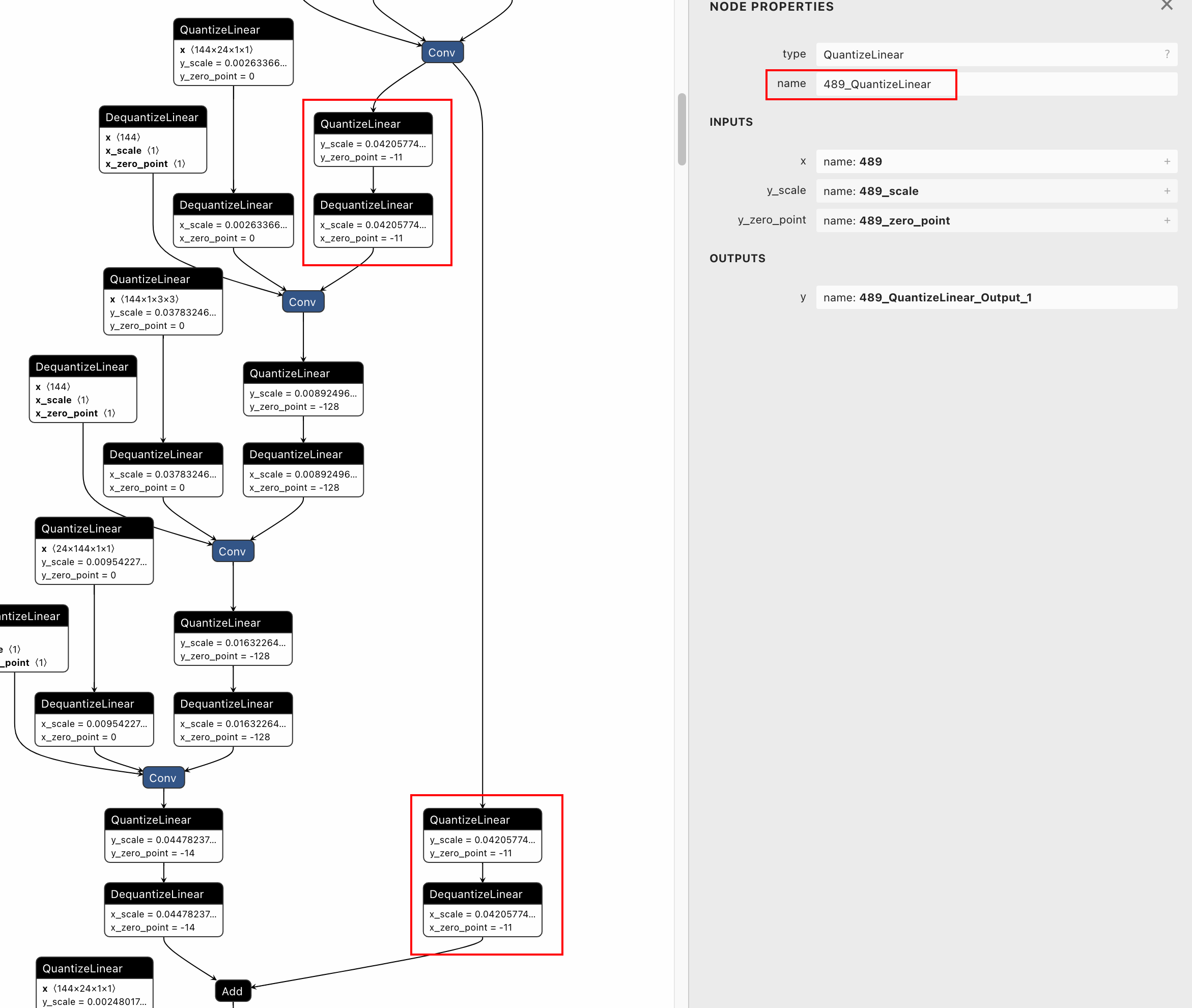
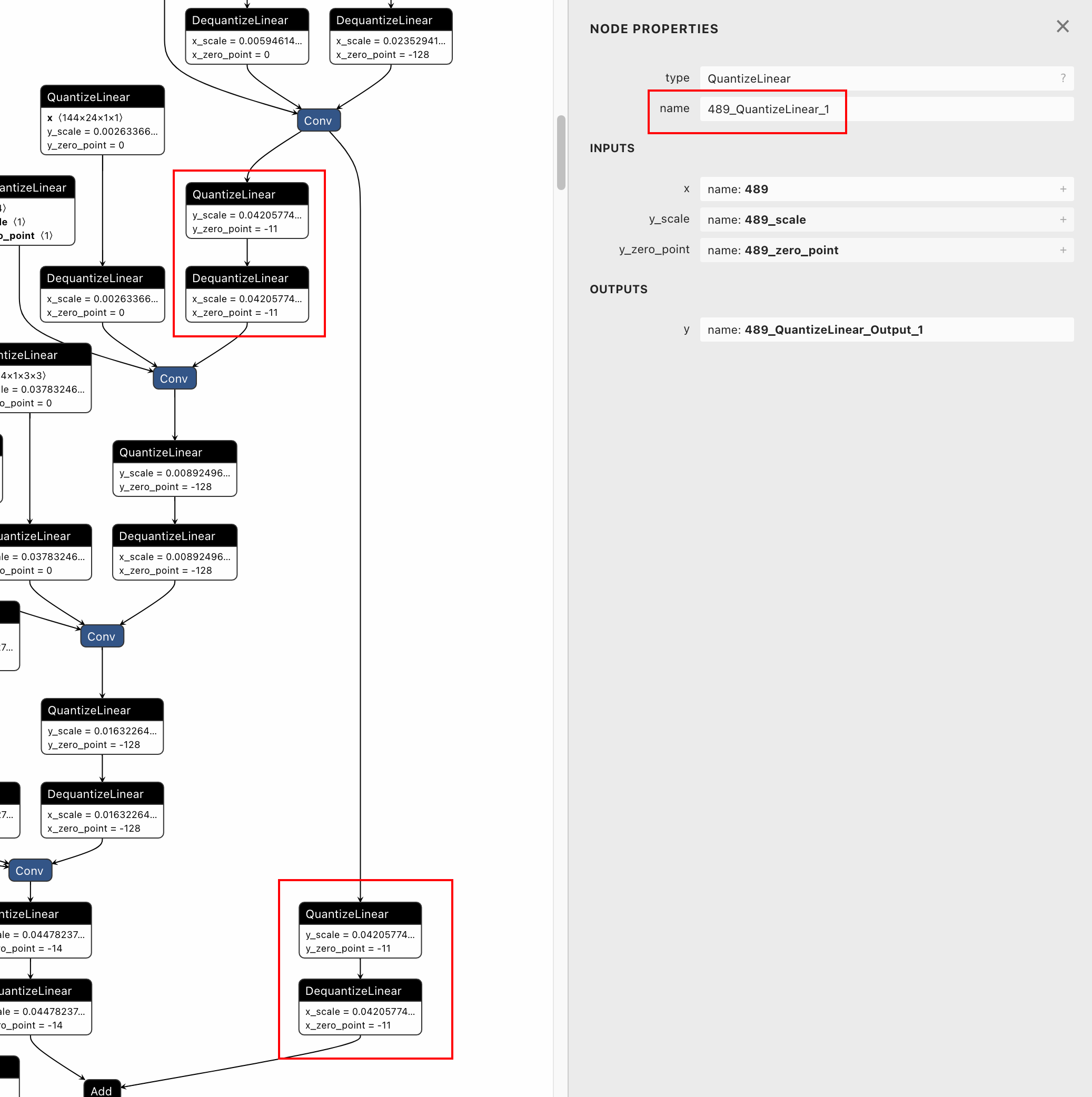
### Description <!-- Describe your changes. --> Bug fixed: Quantized models cannot be loaded into ort.InferenceSession when DedicatedQDQPair is True in extra_options of QDQQuantizer. Solutions: Add postfix to node names of dedicated QDQ pairs similar to tensor names of them. ### Motivation and Context <!-- - Why is this change required? What problem does it solve? - If it fixes an open issue, please link to the issue here. --> Loading quantized model fails when setting `DedicatedQDQPair` to `True` in `extra_options` and raise an error as below: ``` Fail: [ONNXRuntimeError] : 1 : FAIL : Load model from mobilenetv2-opset10-quantized-dedicated.onnx failed:This is an invalid model. Error: two nodes with same node name (489_QuantizeLinear). ``` After visualizing the quantized model using netron, we can find that both the dedicated QDQ pairs for tensor 489 have the same node names of "489_QuantizeLinear". So I found that in QDQQuantizer, there is no unique postfix for the node names of dedicated QDQ pairs. <img width="1171" alt="image" src="https://user-images.githubusercontent.com/12782861/212010296-f8cc05ce-c20e-4189-a692-aaf4bbac3a29.png"> Therefore, I add postfix to node names of QDQ pairs similar to doing so to tensor names. After this modification, the quantized model can be loaded successfully and dedicated QDQ pairs have different node names.👌🏻 <img width="1037" alt="image" src="https://user-images.githubusercontent.com/12782861/212010594-78eba39d-eab6-4d77-9ecd-b55f5303bcf4.png"> |
||
|---|---|---|
| .config | ||
| .devcontainer | ||
| .gdn | ||
| .github | ||
| .pipelines | ||
| .vscode | ||
| cgmanifests | ||
| cmake | ||
| csharp | ||
| dockerfiles | ||
| docs | ||
| include/onnxruntime/core | ||
| java | ||
| js | ||
| objectivec | ||
| onnxruntime | ||
| orttraining | ||
| package/rpm | ||
| samples | ||
| test | ||
| tools | ||
| winml | ||
| .clang-format | ||
| .clang-tidy | ||
| .dockerignore | ||
| .flake8 | ||
| .gitattributes | ||
| .gitignore | ||
| .gitmodules | ||
| build.amd64.1411.bat | ||
| build.bat | ||
| build.sh | ||
| CITATION.cff | ||
| CODEOWNERS | ||
| CONTRIBUTING.md | ||
| lgtm.yml | ||
| LICENSE | ||
| NuGet.config | ||
| ort.wprp | ||
| ORT_icon_for_light_bg.png | ||
| packages.config | ||
| pyproject.toml | ||
| README.md | ||
| requirements-dev.txt | ||
| requirements-doc.txt | ||
| requirements-training.txt | ||
| requirements.txt.in | ||
| SECURITY.md | ||
| setup.py | ||
| ThirdPartyNotices.txt | ||
| VERSION_NUMBER | ||


ONNX Runtime is a cross-platform inference and training machine-learning accelerator.
ONNX Runtime inference can enable faster customer experiences and lower costs, supporting models from deep learning frameworks such as PyTorch and TensorFlow/Keras as well as classical machine learning libraries such as scikit-learn, LightGBM, XGBoost, etc. ONNX Runtime is compatible with different hardware, drivers, and operating systems, and provides optimal performance by leveraging hardware accelerators where applicable alongside graph optimizations and transforms. Learn more →
ONNX Runtime training can accelerate the model training time on multi-node NVIDIA GPUs for transformer models with a one-line addition for existing PyTorch training scripts. Learn more →
Get Started & Resources
-
General Information: onnxruntime.ai
-
Usage documention and tutorials: onnxruntime.ai/docs
-
YouTube video tutorials: youtube.com/@ONNXRuntime
-
Companion sample repositories:
- ONNX Runtime Inferencing: microsoft/onnxruntime-inference-examples
- ONNX Runtime Training: microsoft/onnxruntime-training-examples
Build Pipeline Status
| System | CPU | GPU | EPs |
|---|---|---|---|
| Windows | |||
| Linux | |||
| Mac | |||
| Android | |||
| iOS | |||
| WebAssembly |
Data/Telemetry
Windows distributions of this project may collect usage data and send it to Microsoft to help improve our products and services. See the privacy statement for more details.
Contributions and Feedback
We welcome contributions! Please see the contribution guidelines.
For feature requests or bug reports, please file a GitHub Issue.
For general discussion or questions, please use GitHub Discussions.
Code of Conduct
This project has adopted the Microsoft Open Source Code of Conduct. For more information see the Code of Conduct FAQ or contact opencode@microsoft.com with any additional questions or comments.
License
This project is licensed under the MIT License.